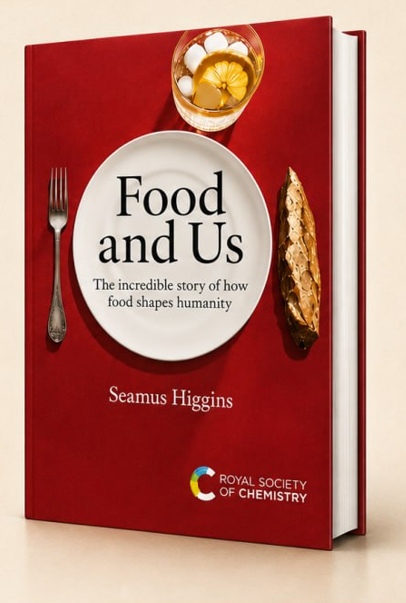
Food and Us explores humanity’s remarkable relationship with food—from our evolutionary beginnings to today’s global food system and the choices that will shape our future.
Through nine interconnected themes, the book brings together evolution, history, science, engineering, business, health and sustainability to tell one extraordinary story. how food shaped humanity—and how humanity transformed food.
Food and Us explores humanity’s remarkable relationship with food—from our evolutionary beginnings to today’s global food system and the choices that will shape our future.
Through nine interconnected themes, the book brings together
evolution, history, science, engineering, business, health and sustainability to tell one extraordinary story. how food shaped humanity—and how humanity transformed food.
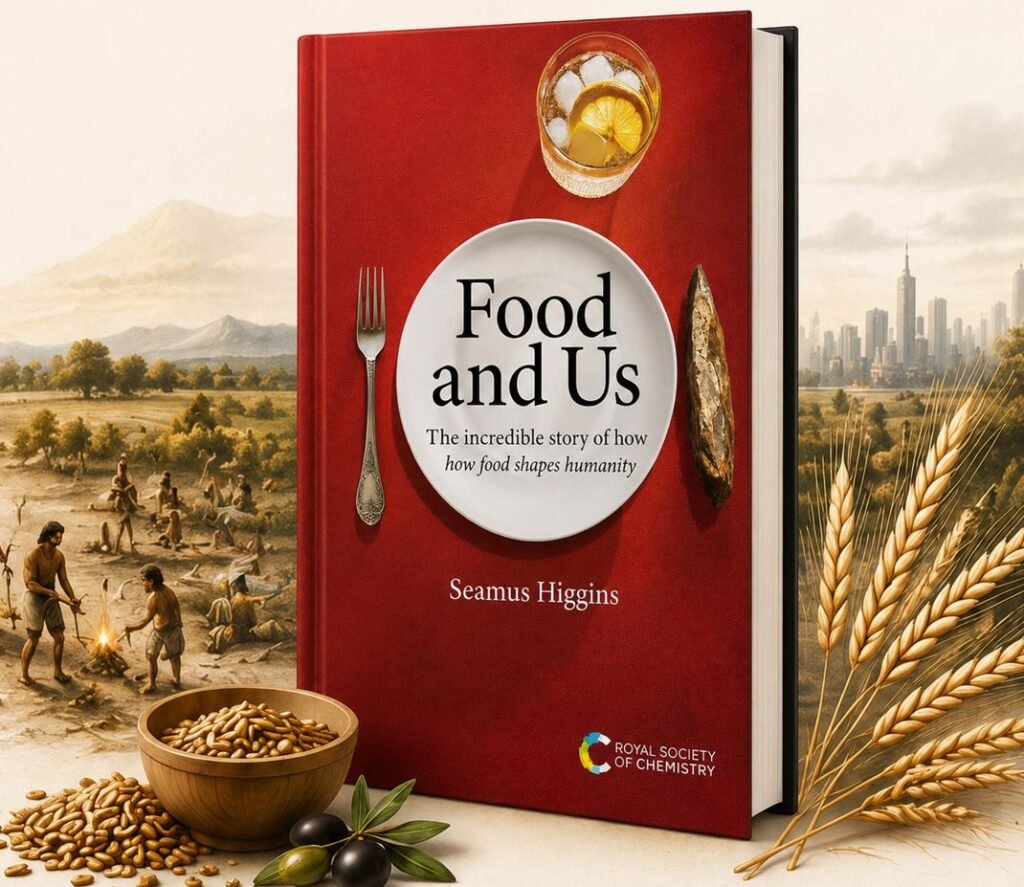
The story begins long before civilisation.
For more than three million years, food shaped our evolution, our brains and our biology. From the foods we could find, gather and eventually cook, our ancestors developed the bodies, the brains and the behaviours that define Homo sapiens.
When we began to grow food, we changed the world.
Around ten thousand years ago, humanity made a choice that changed everything. We began to cultivate plants and domesticate animals—a shift from foraging to farming that transformed not only what we ate, but how we lived.
Exploration connected continents. New foods changed everything.
When explorers crossed oceans, they carried more than maps and curiosity—they carried seeds, spices and the future of our food. The Columbian Exchange reshaped diets, economies and cultures across the globe.
As populations grew, our ingenuity grew with them.
From the 1700s onwards, a series of innovations transformed agriculture. New tools, better breeds, fertilisers and mechanisation vastly increased productivity and reshaped the land itself.
We engineered convenience, taste and choice.
In the 20th century, science, engineering and business joined forces to create an entirely new way of producing, processing, packaging and distributing food to billions of people, every day.
We solved hunger, but created new problems.
In the 20th century, science helped us understand calories, fat, sugar and nutrients. But our solutions often created new challenges—convenience soared, and so did chronic disease.
Our bodies evolved over millions of years. Our environment changed in a generation.
Our biology was shaped by scarcity, seasonality and the need to survive. Our brains reward energy-dense foods because, once, they were rare and precious—a survival advantage then, a vulnerability now.
The food system delivers extraordinary value—but at a hidden cost.
Our modern food system feeds billions and generates trillions. But the costs are often hidden: poor diets burden health systems, and environmental damage threatens our planet.
The future of food is something we create—together.
We have the knowledge, technology and creativity to build a food system that nourishes people and regenerates our planet. Our choices today write the next chapter of our food story.
The story begins long before civilisation.
For more than three million years, food shaped our evolution, our brains and our biology.
From the foods we could find, gather, hunt and eventually cook, our ancestors developed the bodies, the brains and the behaviours that define Homo sapiens.
This chapter explores how the evolutionary journey of food and humanity are inseparable—and why the ancient mechanisms that helped us survive still influence the way we eat today.
Why did food play such a central role in human evolution?
How did our brains and bodies evolve alongside food?
Why do many ancient food preferences still influence modern eating?
What can Darwin, DNA and evolutionary psychology teach us today?
When we began to grow food, we changed the world.
Around ten thousand years ago, humanity made a choice that changed everything. We began to cultivate plants and domesticate animals.
This shift from foraging to farming transformed not only what we ate, but how we lived.
Surpluses allowed settlements to grow. Ownership of land emerged. Trade, specialisation, social hierarchies, religions and civilisations all followed.
Food was no longer just sustenance—it became the foundation of society, culture and power.
Why did humans shift from foraging to farming?
How did agriculture transform society and civilisation?
What was the impact of domesticating animals?
How did food surpluses shape power, hierarchy and culture?
Exploration connected continents. New foods changed everything.
When explorers crossed oceans, they carried more than maps and curiosity—they carried seeds, spices and the future of our food.
The Columbian Exchange introduced new ingredients to new lands, reshaping diets, economies and cultures across the globe.
Tomatoes, potatoes, maize, chocolate and chillies—once unknown—became essentials. Sugar, wheat and rice travelled in the other direction.
Our plates today are the delicious result of this extraordinary exchange.
How did exploration connect the world’s food systems?
What foods travelled across continents—and what impact did they have?
How did new ingredients transform diets and health?
How did the exchange of food shape cultures, trade and global connections?
As populations grew, our ingenuity grew with them.
From the 1700s onwards, a series of innovations transformed agriculture. New tools, better breeds, fertilisers and mechanisation vastly increased productivity.
We drained swamps, ploughed prairies and expanded fields to the horizon. Animal agriculture scaled. Yields soared. Food became more abundant—and more affordable.
These advances helped feed billions and lifted many out of hunger. But they also set the course for a food system increasingly shaped by scale, specialisation and efficiency.
How did innovation and technology transform agriculture?
What drove the rise of large-scale animal agriculture?
How did expanding farmland change landscapes and ecosystems?
What were the benefits—and the unintended consequences—of feeding a growing world?
We engineered convenience, taste and choice.
In the 20th century, science, engineering and business joined forces to create an entirely new way of producing, processing, packaging and distributing food.
Factories replaced kitchens. Brands were born. Efficiency became the engine. Global companies emerged. Supermarkets transformed the shopping experience.
Food became faster, cheaper, more consistent and more available than ever before—delivered to billions of people, every day.
It was one of the greatest system engineering achievements in human history.
How did industrialisation transform the way food was produced and delivered?
What role did brands and marketing play in shaping our food choices?
How did supermarkets and global supply chains change access to food?
What were the benefits—and the hidden costs—of engineering food at scale?
We solved hunger, but created new problems.
In the 20th century, science helped us understand calories, fat, sugar and nutrients. But our solutions often created new challenges.
We chased low fat, only to add more sugar. We removed natural foods, replacing them with ultra-processed alternatives. Convenience soared. So did chronic disease.
Our bodies evolved for scarcity. Our environment evolved for balance. But our food system evolved for profit, convenience and speed.
The result: a mismatch between the food we eat and the biology we live in.
Why did our focus on simple measurements lead us astray?
How did the fat and sugar debates shape our food system?
What are ultra-processed foods—and why are they so widespread?
Why does our modern diet conflict with our evolutionary biology?
Our bodies evolved over millions of years. Our environment changed in a generation.
Our biology was shaped by scarcity, seasonality and the need to survive. Our brains reward energy-dense foods because, once, they were rare and precious.
Today, those same ancient systems operate in a world of abundance, convenience and constant availability. The result: cravings, overconsumption and chronic disease.
Science is revealing more about our DNA, our microbiome, our hormones and our reward pathways. But understanding is not the same as changing.
To build a healthier future, we must align what our bodies were designed for with the world we have created.
How did our ancient reward systems help us survive?
What genetic adaptations enabled us to thrive on new foods?
How does the microbiome influence our health and food choices?
Why do our modern environments often override our evolutionary biology?
The food system delivers extraordinary value—but at a hidden cost.
Our modern food system feeds billions and generates trillions. It creates jobs, drives innovation and underpins economies.
But the costs are often hidden. Poor diets burden health systems. Environmental damage threatens our planet. Inequality and waste undermine fairness and resilience.
We need a new way to see the big picture—one that connects people, planet and prosperity.
To build a better future, we must measure what matters, reveal the hidden costs and redesign for long-term value.
What are the hidden costs of our current food system?
How are environmental, social and economic outcomes interconnected?
What would a truly sustainable and healthy food system look like?
What choices and actions can unlock a better future for all?
The future of food is something we create—together.
We have the knowledge, technology and creativity to build a food system that nourishes people and regenerates our planet.
Innovation is accelerating. New ideas are emerging from labs, farms, kitchens and communities around the world.
But the future will not be built by one sector alone. It will take collaboration across science, industry, government and society.
Our choices today write the next chapter of our food story. Let’s write one we can be proud of—for our children, and for generations yet to come.
What kind of food system do we want to create for the future?
How can innovation and technology help us solve our greatest food challenges?
How do we balance the needs of people, planet and economy?
What actions can we take—together—to write a better food story?
Download the first chapter free and discover how food shaped humanity— and how humanity transformed food.
The complete story of how food shaped humanity —and how humanity transformed food.

Buy directly from the Royal Society of Chemistry for worldwide delivery.
Also available from your favourite Book store